
This article is part of the Solitude hub, a single thread within the broader practice of inner work.
Read more from this hub →
“We each have our journey to our true self, and each of us must make it alone.” – Lionel Fisher
What is your relationship with solitude?
Most people will do anything to avoid spending time by themselves. It’s seen as inferior to the ideal of having a big family or friend group. Often, spending time alone is perceived as “weird, uncool, or just plain sad.”
But what if solitude was a gateway to the soul? The clearest mirror we have to gaze upon our lives with honesty? The most powerful inner work path to finding healing, direction, and purpose?
Soul Work Compass Course:
Feeling lost, stuck, and trapped in repetitive cycles of pain? Discover your Soul's Compass to reclaim your purpose and find your path to freedom.
⭐️⭐️⭐️⭐️⭐️ "I am finding out so much about myself and having so many realisations about my life ... I already know it is what I’ve needed for so long." – Jen N.
What if the weird, uncool, or sad thing was actually spending our lives avoiding this fundamental truth about ourselves: that we are born alone and will die alone. Yet in our aloneness, we also exist in all-oneness?
Table of contents
Solitude is a Healing Balm to Modern Loneliness
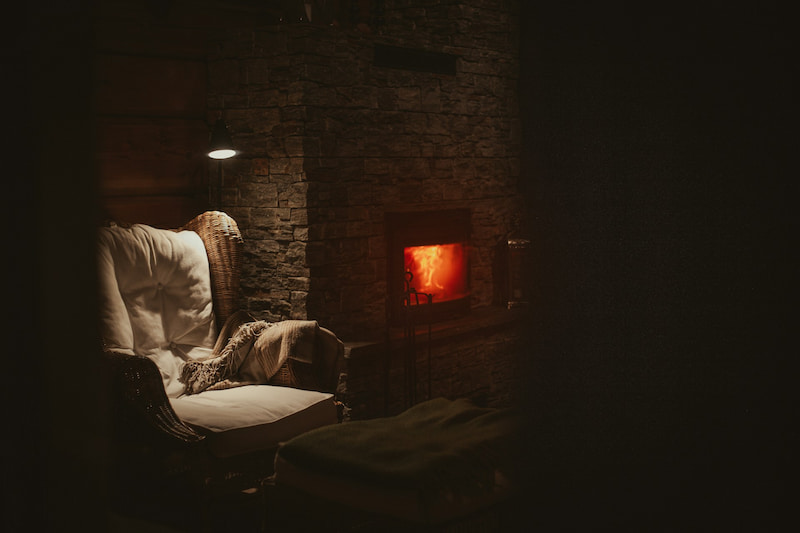
To me, solitude has always been a spiritual path of illumination.
As my life gets louder as a new parent, I’ve been craving the soothing balm of solitude more and more. The endless to-do lists, noise, work, and activities leave a void within me that only silence, stillness, and solitude can fill.
No one tells you how lonely being a parent can feel. The incessant demands. The lack of a “village” to help raise your child. The reduced time, space, and privacy for yourself. I bet you can relate to that feeling of loneliness, but maybe in a different way.
Loneliness manifests in a million forms: leaving a job, breaking away from a toxic family, escaping a controlling religion, getting a divorce, aging, dealing with a chronic illness, neurodivergence, going through an existential crisis …
Solitude, I’ve found, is a powerful spiritual path of healing in these situations. Because yes, you can be around others and find comfort in human company. But at the end of the day, you’re with yourself 24/7, 365 days a year.
We have to reckon with our aloneness. We must embrace it as a basic truth of the human condition. But solitude is not the same as loneliness.
Want to get LonerWolf at the top of your Google search results?
Solitude = Inner Richness; Loneliness = Inner Poverty
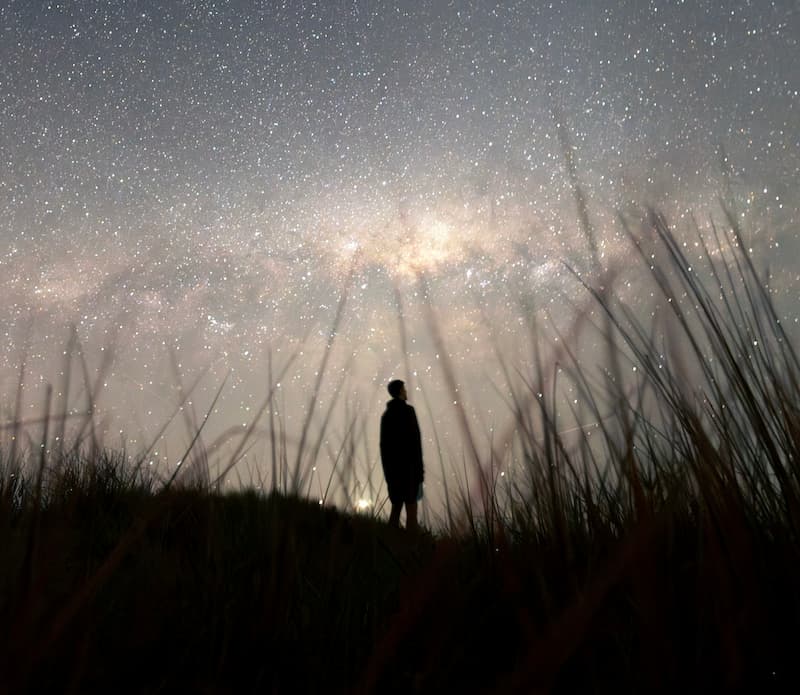
In the words of poet and novelist May Sarton,
“Loneliness is the poverty of self: solitude is the richness of self.”
Most confuse the two, but they’re completely different experiences. While solitude is chosen, loneliness isn’t. Loneliness feels like being cut off from everyone and everything, but solitude feels like being a quiet presence connected to All-That-Is.
This is why I believe solitude is a spiritual path of healing: it helps us find the internal space to stop, reflect, listen to ourselves, and find a deeper companionship with existence.
When we’re feeling lonely, on the other hand, we feel an internal sense of homelessness. A loss of soul. A sense of being isolated, cut off, and alienated from ourselves, others, and life.
They sound similar, but they’re worlds apart.
In the words of author Kent Nerburn
“Solitude is a condition of peace that stands in direct opposition to loneliness. Loneliness is like sitting in an empty room and being aware of the space around you. It is a condition of separateness. Solitude is becoming one with the space around you. It is a condition of union.”
You Don’t Need Gurus, You Need Silence, Stillness, and Solitude
A few years ago, I was listening to a podcast episode from On Being, and in it, beloved Irish poet John O’Donohue was talking about how, for the mystical journey, you don’t need to go to gurus or read lots of stuff. You just need to build into your days a rhythm of silence, stillness, and solitude.
That stuck with me. And I’ve held it within my heart ever since.
As our world becomes increasingly connected (think social media, capitalistic globalization, AI), we’re also becoming increasingly disconnected. It’s a strange paradox. But look around you.
Go out on the street and count how many people are on their phones VS looking up and actually engaging with life. Look at the world loneliness statistics.
As we become increasingly disconnected from ourselves due to hyperconnectivity and the fast pace of modern life, we need a way to slow down, tune in, and reconnect. That’s where solitude comes into the picture. That’s why it’s a spiritual path: it opens a door to peace, insight, and deep connection.
Would you like to save this?
Your information will never be shared.
Spiritual and self-help gurus can give wise advice. But they can’t fill that void for you. And in many cases, they directly or indirectly take that power away from you by positioning themselves as having all the answers. Which is why outsourcing your healing to them is a bad idea.
In Solitude, the Soul Speaks
“True solitude is a way of being that needs to be cultivated. You cannot switch it on or off at will. Solitude is an art. Mental training is needed to refine and stabilize it. When you practice solitude, you dedicate yourself to the care of the soul.” – Stephen Batchelor
The modern art of solitude is a daily practice – it’s an art of prioritizing silence and stillness over noise and activity. It’s a form of soul recovery. We’re used to doing. Being asks you to shift gears entirely.
For me, what helps is a combination of journaling and meditation. Brief walks in nature, yoga, Reiki, and other healing modalities also help me to find that internal space. The point is to find something simple that you can stick to each day – I’ll call this the four S’s:
Silence, stillness, solitude, and simplicity.
This is the path of the lone wolf. The call of the healer. The way of inner work.
So if you find yourself alone in life, I hope these words can help you see the power in this position. Solitude is a spiritual path of healing: an opportunity to find yourself, listen to your deeper calling, and reclaim your soul’s light.
Tell me, what is one thing about solitude that people get wrong? I’d love to hear in the comments.
If you benefited from this free guide, it would mean the world if you could buy me a coffee.
If you need more help, we offer 2 powerful ways to guide you on your inner journey:
1. The Soul Work Compass Course: Break free from feeling lost and disconnected. The Soul Work Compass is a practical 12-step course that transforms soul loss into soul clarity. Discover your core values, heal core wounds, and create a personalized compass to guide every decision you make.
2. The Inner Work Journal Bundle: Heal at the root. This Inner Work Journal Bundle guides you through self-love, inner child healing, and shadow integration with 150+ prompts and activities. You get editable digital files to use on any device or print unlimited times. Not for lukewarm seekers, these journals are for those ready to transform.
When I was younger I thought there was something seriously wrong with me. I was always there for others but did not know how to be for myself. I was the life and soul of a party, always looking to see if everyone was OK and then chastising and being critical of myself when I had to leave earlier than I felt I should have ( my battery had run dry ).
Roll on, decades later, I am so comfortable and in tune with myself, you could knock me sideways with a feather. Two of the greatest gifts we all have are introspection of ourselves and finding solace in solitude. Both have been my life-savers.
Being one’s True Self is quite possibly the highest achievement and greatest accolade we can bestow upon ourselves and in turn, we can then help others to do the same.
Thank You to Mateo and Aletheia in Lonerwolf for inspiring and continuing to inspire all of us to be the person we were always meant to be. It is a wonderful journey both together and separately.
Lots of ❤️
This article really speaks to me. Most people view solitude as lonely and as you mention: sad. I went for lunch on my own recently because I wanted to sit outside in the shade and colleagues were perplexed: did you go out alone? But… So being on your own is nothing sad or weird or means you are lonely. It just mean you can be comfortable in your own company. I don’t need anybody to entertain me. I have the tendency to go with somebody else want (people pleaser ;) ), so being on my own gives me the space to listen to my own voice: what do I want to do, experience? Solituted helps me recharge after a day in the office with all kinds of people, stories, energies and emotions. For me it is a life saver. Not something sad or weird, but a way of being.
I love my job working with families whose child is struggling with mental health. I am also often exhausted by it. I have found that solitude is the only thing that refills my empty tank before the next week begins. I have finally accepted that one day a week, I need solitude for as much of one day as possible to be rested and ready for my next week. It gives me time for myself (and my Self) to journal, sleep, organize and be prepared for the work week.
That sounds like fulfilling but demanding work – I’m glad solitude offers you that recharge Shannon. Great work 💜
Well said (written)! 🌹
Thanks Martha!
Being in solitude restores the soul and mind. I so enjoy being in solitude when am able to do this as a Hairstylist am always busy with clients…talking…working…creating etc…so being in solitude helps restores the soul and enriches the mind. Thank you for your article.
Blessings to you.
It’s so enriching 💜
I was reading a book by Zen monk Shunmyo Masuno- I don’t remember which, exactly- it was either “How to let things go” or “Don’t worry”. Anyhow, he said something along the lines of nobody can ever know you for who you are exactly and you will never know anyone for who they are exactly. So, it’s better not to push others trying to get them to know you completely. After all, nobody can really handle the whole truth about us and we can’t handle the other person’s truth.
I know this sounds sort of pessimistic, but in the end I found it sort of illuminating, because I think that we need a lot of people (or even jobs, hobbies etc) to match the different aspects of ourselves and sometimes they are not really enough. Nobody can be the romantic “one and only”, no matter how much we try.
Our only chance may be to get to know ourselves better, I think! (Through solitude, of course).
Every other effort, is pretty hopeless, no matter who the other person is- a spiritual guru, a teacher, a partner, a parent etc.
Thanks for the ever… delicious food for thought! 🙂
Yes, best not to seek our wholeness in others, no matter who they are. Not only is it unfair for you, but it’s also too much pressure on them – a huge burden to carry! Thanks Georgina 💜
Great reminder, when considering all the overwhelming options of thus new ‘post normal’ time,
of what life is about and how we are just as important as all the other people around us – in the words of the song ” they call us lonely when we’re really just alone” (Roddy Frame)thank you
Thank you Gene 💜