
“The mind is like an iceberg, it floats with one-seventh of its bulk above water.” – Sigmund Freud
“Within your subconscious depths lie infinite wisdom, infinite power, and infinite supply of all that is necessary, which is waiting for development and expression.” – Joseph Murphy, The Power of Your Subconscious Mind
Learning to work with your subconscious mind is not just mysterious and fascinating, but essential when it comes to inner work, Soul recovery, and all forms of healing and psycho-spiritual transformation.
Not only is your subconscious responsible for over 90% of your mental life, but it’s also the gateway to accessing your Soul’s wisdom or your Deeper Self’s inner knowing.
In the words of depth psychologist Bill Plotkin,
Soul Work Compass Course:
Feeling lost or disconnected? The Soul Work Compass guides you through a 12-lesson alchemical journey to transform emptiness into clarity and deep self-insight. Create your personal compass to navigate life with clarity, freedom, and soul-aligned direction. Start your Great Work today!
“Soul is encountered in the subconscious (i.e., that which lies below awareness).”
If you feel disconnected from yourself, if you feel lost, or if you keep falling into patterns of self-sabotage, the issue may be that you haven’t yet learned to speak the language of your subconscious.
When ignored, misused, or misunderstood, the subconscious mind can wreak havoc on our lives and best intentions. We might, for example, try to become more confident or empowered, but the subconscious false identity scripts running beneath the surface sabotage our every effort.
As psychiatrist Carl Jung famously writes,
“Until you make the unconscious conscious, it will direct your life and you will call it fate.”
Ultimately, working with the subconscious is at the root of healing practices such as inner child work and shadow work. It is where our wounds are stored, our patterns run, and where we can reprogram the past.
So what is the subconscious mind, and how can we learn to tap into its power to enact real, long-lasting, deeply rooted change? Let’s find out.
Table of contents
- How the Subconscious Mind Speaks
- Approach 1: The Dream World as a Subconscious Mirror
- Approach 2: Liminal & Trance States – The Threshold Between Worlds
- Approach 3: Automatic Writing & Pendulum Work – Bypassing the Conscious Editor
- Approach 4: Symbol, Sigil & the Language of the Deep Self
- Approach 5: Intuition and the Subconscious: the Voice of the Soul
- Approach 6: Plant Medicine & Psychedelics as Subconscious Catalysts
- Conclusion: Making Friends With Your Depths
How the Subconscious Mind Speaks

“The language of the subconscious is emotions and story. Which is to say the subconscious is not driven by rational argument, logic, facts, and words.” – Steven Fulmer
The concept of the ‘subconscious mind’ was first coined in the 18th century by German philosopher Christopher Riegel, and was later adopted and popularised by Sigmund Freud.
In modern times, we’ve learned a lot about the subconscious thanks to the pioneering work of people like Carl Jung, Daniel Kahneman, and others.
We now know that the subconscious mind speaks through:
Want to get LonerWolf at the top of your Google search results?
- dreams,
- visions,
- song,
- dance,
- sensations,
- symbols, and
- synchronicities.
In other words, the subconscious tends to be non-linear, abstract, and highly creative.
How do you know when the subconscious mind speaks to you? You’ll have a sense of this through moments of intuition, resonance (think goosebumps or tingles up the spine), bursts of insight, nighttime dreams, and happy coincidences (i.e., synchronicities).
Unlike the rational and linear “black-and-white” conscious mind, the subconscious mind is “multicolored” and multidimensional in nature. This is what makes it so powerful, fascinating, and often intimidating.
If the conscious mind is like the sun in the daytime, the subconscious mind is like the moon in the nighttime. It is subliminal, subterranean, and a little strange. The closest person I can think of who embodies the subconscious mind is artist Salvador Dali – his paintings and personality speak of the bizarre nature of this inner realm. Filmmaker Alejandro Jodorowsky is another delightfully odd example.
To clarify, I’m not suggesting that we all become replicas of Dali or Jodorowsky. I think a better role model would be mystic and psychiatrist Carl Jung, who pioneered the exploration of the subconscious and unconscious back in the early 20th century.
He came up with the idea of “active imagination,” which is essentially a form of daytime conscious dreaming. Essentially, any altered or liminal state of consciousness is a brilliant doorway into the subconscious – we’ll get more into this soon.
If you want to get an idea of what your subconscious mind is hiding right now, take our subconscious mind test.
Let’s now explore how you can start connecting with your subconscious!
Approach 1: The Dream World as a Subconscious Mirror

“… the dream describes the inner situation of the dreamer, but the conscious mind denies its truth and reality, or admits it only grudgingly.” – Carl Jung, The Essential Jung
One of the best ways to connect with your subconscious mind is through your dreams – something that most of us have each night. (If you don’t dream, there are certain practices like Yoga Nidra and herbs you can take, like Calea zacatechichi, to aid this process.)
What is fascinating about the dreamworld is that not only will it provide us with ample symbolic imagery that reflects our conscious fears, desires, and needs, but it can also be influenced.
Would you like to save this?
Your information will never be shared.
Dream incubation, for example, is the process of “seeding an idea” within the subconscious before we go to sleep. You might, for instance, want to find out what the wisdom of your subconscious thinks about moving to a new city. Before going to sleep, you would focus intently on this question, perhaps even meditating on a picture of the city you wish to move to. Then, you’d repeat this process each night until you get a dream to answer your question.
If you’d like to go deeper into using your dreams as a form of inner work and self-exploration, see my article on how to practice dream work. For learning to become conscious within your dreams, see my guide on learning the art of lucid dreaming.
Approach 2: Liminal & Trance States – The Threshold Between Worlds
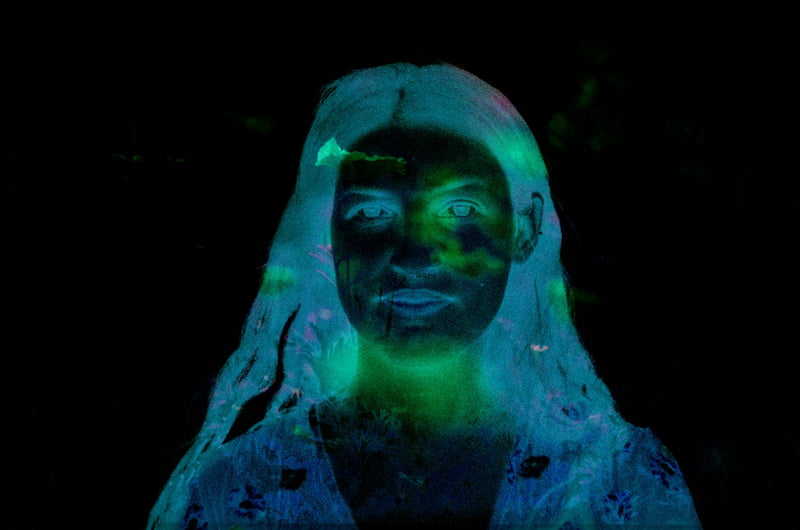
If dream work is too difficult for you, as it has proven to be for me at times (when I was younger, it was a different story – I could somehow lucid dream spontaneously!), you may find it easier to connect with the subconscious mind in liminal and trance states.
There are so many altered states of consciousness, or what I call “threshold states,” that tip you just over the edge of waking consciousness into the subconscious enough to be highly effective.
Some of those include:
- Hypnagogia – a state between resting and sleeping where you can access the creative nature of the subconscious mind more readily (it’s essentially that short period between wakefulness and sleep where your mind starts entering memories, stories, etc).
- Scrying – this practice is often done by those in the occult community and is traditionally associated with ‘crystal ball’ readers, but here, I’m putting it in the context of accessing the wisdom of the subconscious mind. It’s done by meditatively relaxing the conscious mind and letting it drift into a misty state of awareness through focusing on a reflective surface of some kind (mirror, water, etc.).
- Various trance states such as using breathwork, mantra, primal rhythms, self-hypnosis, visualization, and other methods.
Approach 3: Automatic Writing & Pendulum Work – Bypassing the Conscious Editor

“Your subconscious mind is all wise and knows the answers to all questions.” – Joseph Murphy
Sometimes, having tactile or physical ways of accessing the subconscious mind is much easier than non-physical techniques. These tangible methods bypass the conscious mind, which tends to ‘edit,’ judge, and ignore anything that sounds ‘illogical’ or spontaneous.
Two brilliant tools that can help you here are automatic writing and using a dowsing pendulum to ask questions and receive responses directly from your subconscious.
While these practices may seem like a curious novelty, they can actually become spiritual practices if you commit to them for long enough.
Pendulum work is brilliant for beginners. There are many books out there, like Pendulum for Beginners by Alyssa Vera, which can assist you. I don’t, however, recommend using a pendulum in the long term, as it can distract you from sensing your own inner wisdom.
Automatic writing is a better candidate for long-term practice as it directly ‘channels’ the wisdom of your subconscious realm. This technique essentially involves getting into a meditative frame of consciousness and letting yourself write intentionally in a ‘stream of consciousness’ style on a piece of paper.
For over 15 years, we've strived to make this website a haven of free, valuable information. Imagine a world where this knowledge wasn't readily available.
If this post sparked a meaningful insight or helped you in any way, please consider a donation as a heartfelt "thank you" for keeping this resource free.
Every contribution, big or small, allows us to keep giving back.
 Yes, I'd Like to Help
Approach 4: Symbol, Sigil & the Language of the Deep Self
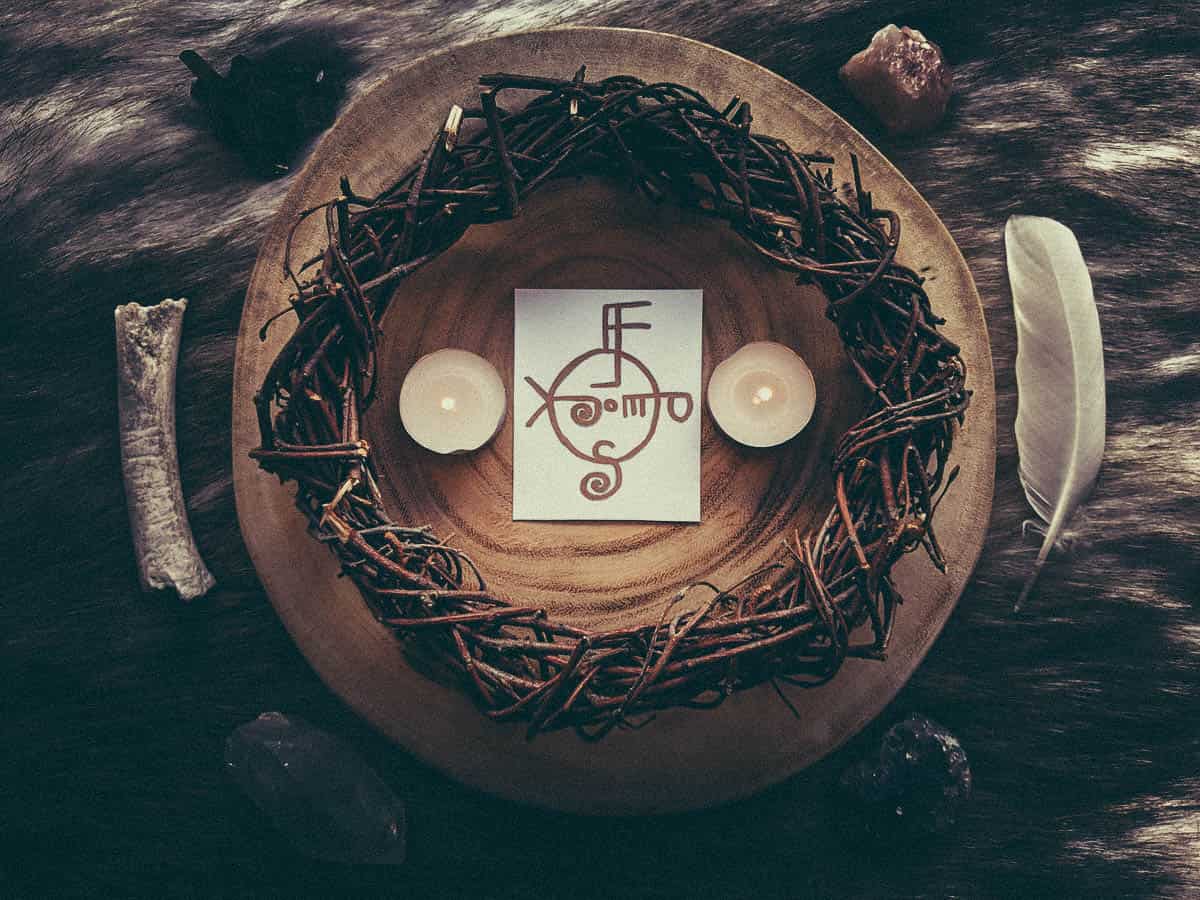
“The subconscious self is not a dumb brute that can be ordered around, but a highly intelligent entity.” — Jan Fries, Visual Magick
One of my favorite ways of connecting with the subconscious, listening to the Soul’s wisdom, and rewriting old stories and scripts is through symbolism.
If you enjoy hands-on creation and like the ‘occult vibes,’ look into crafting your own sigils. These are potent little symbols that you create based on a deep personal intention (e.g., developing more self-love, finding more inner peace, overcoming a certain limiting pattern, etc.).
Sigils work on the premise of what 20th-century metaphysical writer Florence Scovel Shinn shared in her book The Game of Life and How to Play It,
“The subconscious is simply power, without direction. It is like steam or electricity, and it does what it is directed to do; it has no power of induction.”
Sigils are ways of harnessing the power of the subconscious mind and directing it towards whatever you wish to “manifest” in your life.
Working with the symbols of the tarot, however, is probably my favorite way of accessing the wisdom of the subconscious. Each morning I pull a tarot card – not because I believe in fortune telling, but because I see the symbols of tarot as archetypes of the unconscious. They are mirrors of the psyche that reveal my blind spots, hidden desires, and unfulfilled needs.
Oracle and tarot cards are readily available these days. But I’d just focus on working with one or two decks to begin with. Remember that they are merely reflections of your own innate truth: they have no power on their own (they’re just pieces of cardboard). So beware of getting lost in the consumerist rabbit hole like I have a few times.
Approach 5: Intuition and the Subconscious: the Voice of the Soul

“Intuition is the whisper of the soul.” – Jiddu Krishnamurti
If there’s any approach I recommend taking to working with your subconscious mind, it’s learning to listen to and trust your intuition directly.
Your intuition is an expression of your Soul’s voice – it is your subconscious communicating to you in waking life. You can sense intuition in moments of spontaneous ‘knowing,’ in the tingles that run through your body when you sense danger or opportunity, in the inexplicable feeling that something is or isn’t meant for you.
There are two types of intuitive wisdom: gut instincts and intuitive knowing.
Your gut instincts are more primal in nature. They’re sourced from your body’s intelligence. Your intuition is more ‘higher intelligence.’ It’s sourced from that part of your brain that knows without knowing why or how.



I love the words of Gary Zukav here,
“Intuition is a walkie-talkie between the personality and the soul.”
Approach 6: Plant Medicine & Psychedelics as Subconscious Catalysts

Finally, we come to the world of psychedelics and plant medicines. These are powerful, strong, and direct ways of not just connecting with your subconscious mind, but embodying it in the wildest ways.
I’m sure you’ve witnessed (or been) someone in a rave party under the influence of a psychedelic who seems to be possessed with the whackiest and most bizarre behaviors and responses to others. This person was likely expressing the contents of their subconscious.
You’ve probably also seen ayahuasca ceremonies with people vomiting, wandering around, and communicating with unseen entities.
A word of warning: Yes, plant medicines and psychedelics can radically accelerate your ability to commune with your subconscious. But for some, they can be scary, overwhelming, and sometimes even traumatizing (especially for those with neurodiversity or with pre-existing mental illnesses). If you choose this path, do so with caution, with someone safe and/or a trained psychedelic therapist.
Learning the art of psychedelic integration is essential after these experiences to get the most out of them.
Alternatively, you might prefer exploring some ‘legal psychedelics’ to aid in lucid dreaming states. These herbs are more gentle than magic mushrooms, cannabis, mescaline, and other plant medicines.
Whatever you choose, proceed with gentleness, slowness, and attunement to your inner self.
Conclusion: Making Friends With Your Depths
As you can see, there are so many ways of communing with and rewiring the old scripts our subconscious minds carry.
What’s most important here isn’t how you approach your subconscious, but the ultimate goal of this work: healing, self-befriending, and Soul recovery.

Our subconscious minds are the doorways to the wise, wild, warm, welcoming, and whole Self (Soul) within us. They’re not just full of ‘monsters’ and bizarre things, as is often depicted in pop culture.
In the words of Irish poet John O’Donohue in his beautiful book Anam Cara: Spiritual Wisdom from the Celtic World,
“We falsely understand the subconscious as the cellar where all of our repression and self-damage is housed. We have imagined monsters down there out of our fear of ourselves … In actual fact these demons do not account for all the subconscious. The primal energy of our soul holds a wonderful warmth and welcome for us. One of the reasons we were sent onto the earth was to make this connection with ourselves, this inner friendship.”
So go forth carrying this vision in mind. Know that you have a powerful tool beneath the surface of your life, one that “multiplies and magnifies whatever you deposit into it” in the words of Joseph Murphy. One that can be your best friend and ally if you let it.
Tell me, what approach to connecting with your subconscious mind calls to you? What do you sense might be hidden beneath the surface? Share with me in the comments below.
Two paths to inner transformation – here’s how I can help you go deeper:
1. The Soul Work Compass Course: Feeling lost or stuck in repetitive cycles of pain? The Soul Work Compass Course is your guide to reclaiming your true purpose. In this deep yet practical journey, you’ll learn how to heal core wounds and create a tangible "Soul's Compass" to navigate life with clarity. Enroll now and find your True North!
2. The Inner Work Journal Bundle: Ready for deep transformation? This bundle includes three powerful journals – Self-Love, Inner Child, and Shadow Work – with 150+ prompts to heal wounds, integrate your darkness, and experience bone-deep change. Digital & printable. Print unlimited times.
Enjoyed material. Liked idea of soul is energy without direction, and we are here on earth to give it direction—with our dreams and intentions. Also, physical tools to connect to subconscious and wisdom of the universe are distractions. It is best to connect conscious mind to subconscious soul directly. And to put soul to work by having it provide ideas for a move or change in lifestyle or project that has no traction i.e., a modern secure anonymous voting system.
Thanks for sharing this, John.
As usual I found your writing on the subconscious full of wisdom & always appreciate your refreshing self honesty. A point that resonated with me were your comments on dowsing. I agree that over reliance on this ( & i have overused it when I feel insecure) can prevent you from listening for your own in-tuition. Like a quick fix! I hadn’t really articulated my unease about it until I read your article. Thanks!
Tree of life
Wish I could upload a recent photo.
I had a ayh moment
Thank you wonderfuls
Thank you Derryn 🌲
Great article! I appreciate you guys and your website. I have been using the Healing Runes for almost thirty years, tarot and medicine cards, dream work and currently drawn to taking a course in shamanic journeying. I also continue to go inside and work on healing my wounded parts through IFS. All have been helpful due to the challenges I faced early in my childhood which brought them into my life to guide me. Inner work is the key.
What a beautiful and powerful collection of healing practices, Chris. Thank you for sharing 💜
I’m drawn to automatic writing more than anything I’ve read. I’ve journaled and written poetry for many many moons… Writing is very much a form of therapy for me. I’ve thought about trying automatic writing on and off for the past year or so and for some reason or another I hesitate though I’m not sure why. And reading your article has once again made me feel that pull.
A moment of synchronicity. :) Sounds like it’s time to take the leap, Sarah!
while inner child work and shadow work emphasize knowledge of the processes in trance state, the role that symbols play in your conscience, and dreams as journeys in the unconscious – personally, maintenance of a plant based diet with full gratitude to farmers and the grain/fruit being assimilated and released as waste – in itself is a process of being and becoming nature, an intrinsic part of it, developing attunement to the voices of beings other than humans, and listening to soil, water, fire and air as elemental components of life
Beautiful. I love this mindful approach to eating, Hussain. The food we eat certainly has a direct impact on our conscious/subconscious. Thanks for sharing. :)
Thank you for this article.
My pick,
Intuition, symbols & language of the deeper Self, dream world.
I take it that every content of my subconscious is one way or another a pathway to my True Self if I acknowledge and integrate it.
Nice pics, FT. And yes, the subconscious is a powerful doorway to deeper wisdom and self-insight.