

“Soul connections are not often found and are worth every bit of fight left in you to keep.” – Shannon L. Alder
Have you ever experienced a moment where you gazed into another’s eyes and felt deep recognition, got into a long conversation where time stopped existing, or simply felt like you had “come home” in the presence of someone?
These magical moments of deep kinship often come when we have a deep soul connection with another person.
We can define soul connections in various whimsical and new-age ways. For example, some people believe they are past-life connections or part of the same “soul group” as us. But I want to create a ‘down-to-earth’ definition here because I can neither confirm nor deny the experience of such phenomena.
Soul Work Compass Course:
Feeling lost or disconnected? The Soul Work Compass guides you through a 12-lesson alchemical journey to transform emptiness into clarity and deep self-insight. Create your personal compass to navigate life with clarity, freedom, and soul-aligned direction. Start your Great Work today!
Soul connections are all about resonance to me – they are when two people are on the same vibrational ‘wavelength.’
We can see this in real life. For example, say that you have two guitars in a room. If they’re both tuned to the same pitch, you can see resonance happen effortlessly. If you pluck string D on the first guitar, the sound waves will travel through the air and hit the second guitar. That second guitar will mysteriously begin vibrating and humming the D string all by itself!
In this guide, I’ll share with you the different types of soul connections out there, from the fleeting to the long-term, and how inner work deepens our capacity to get the most out of these sacred kinships.
Table of contents
- The Inner Work Foundation: Why Soul Connections Require Self-Knowledge
- The Spectrum of Soul Connections
- 7 Types of Love Experienced in Our Soul Connections
- Being a Lone Wolf and Finding Soul Connections
- How to Recognize a True Soul Connection (vs. Projection or Fantasy)
- Conclusion: Soul Connection as a Path of Return to the Self
The Inner Work Foundation: Why Soul Connections Require Self-Knowledge

“The aim of conscious love is to bring about rebirth.” — A. R. Orage
Before we get into the various types of soul connections, I want to share something I rarely see written about, especially in the context of relationships.
For soul connections to be deeply received in their fullness – for them to meaningfully transform, awaken, and help us to grow as people, we need to approach them consciously and intentionally.
We need to see them as inner work in practice – as living and breathing teachers here to illuminate our light and darkness. This requires self-knowledge or the willingness to become more self-aware.
Unlike ego connections, where two people connect over superficial likes, dislikes, and interests, soul connections go much deeper. They touch on the level of buried wounds, disowned power, and the Deeper Self (or Soul).
Want to get LonerWolf at the top of your Google search results?
This is why actively practicing inner work is so vital for relationships, and especially spiritual relationships, to thrive. Without commitment to personal growth, finding our core wounds, and meeting our shadow parts, it’s easy to project our darkness onto the other and self-destruct. Our unhealed wounds have a way of distorting how we perceive intimacy and undermining our efforts to truly understand or empathize with the other.
In the words of clinical psychologist John Welwood in his book Toward a Psychology of Awakening,
“For many of us today … intimate relationship has become the new wilderness that brings us face to face with all our gods and demons. It is calling on us to free ourselves from old habits and blind spots, and to develop the full range of our powers, sensitivities, and depths as human beings — right in the middle of everyday life.”
There’s also a case to be made that all our relationships in life are soul connections. Even if we don’t resonate with someone, it doesn’t mean they aren’t here to help us grow (even via negative circumstances). This is why, when someone asks whether a relationship can survive if it isn’t spiritual, my response is “if there is mutual respect and love, then yes.” The most “spiritual” thing, after all, is love.
The Spectrum of Soul Connections

If we’re lucky, we’ll experience multiple forms of soul connection through our lives. But most people experience one or two.
Here’s the full ‘spectrum,’ from platonic to romantic:
- Kindred spirits & soul family – these are the connections we have with others that are often platonic (although can be romantic). We can think of these as the “belonging connections.”
- Soul friends & spiritual partnerships – typically platonic in nature and sometimes romantic, these can be classified as our “growth connections” because they help us to grow deeply as people.
- Karmic relationships & soul ties – often romantic and sometimes platonic, these can be classified as our “wound connections” because they often reveal the unhealed places within us. Not all soul ties are complicated, but they do reflect back our unconscious state to us.
- Soulmates & twin flames – these connections are usually romantic in nature, and they tend to last longer than the other types of soul connection (perhaps with the exception of soul families, which are also often long-lasting). They can be classified as our “deep recognition connections” as we see ourselves mirrored back in all our shadow and light. Many people mistake twin flame connections (a word I have since distanced myself from) with chronic, dysfunctional, or enmeshed dynamics. These days, I prefer the word ‘soul mate’ to twin flame, as it feels more harmonious and reflective of a healthy connection.
Let me know what type of soul connection you’ve experienced in the comments. I’d be curious to hear!
7 Types of Love Experienced in Our Soul Connections

One of the most beautiful and profound experiences of having a soul connection is the different types of love it can bring forth from within you.
In his post on the different types of love, Mateo defines them as:
- “Eros” or Erotic Love – this occurs in some types of soul connections (soul mate, karmic, or twin flame)
- “Philia” or Affectionate Love – this occurs in almost all soul connections (with the exception of karmic relationships, which can often be rocky and antagonistic)
- “Storge” or Familiar Love – this is a platonic type of love felt between friends or parents-children
- “Ludus” or Playful Love – this is where the inner child comes out to play with sprinkles of mischief and joy, found in all types of soul connections
- “Mania” or Obsessive Love – this compulsive type of love is often found in karmic relationships and sometimes soul mate or twin flame connections
- “Pragma” or Enduring Love – this is mature love, often found in relationships that have lasted a long time (present within long-lasting soul connections)
- “Philautia” or Self Love – one of the greatest benefits of soul connections is that they help us to build a better relationship with ourselves by mirroring back love to us
I haven’t included unconditional love (agape) above, as it’s rare to feel this as imperfect and flawed beings. However, sometimes, we do reach a level of spiritual advancement where this is possible.
If you’d like to go deeper into this topic, I recommend taking our Love Styles Quiz to find out how you best receive love from others. We also have a Soul Mate Quiz if you suspect you’ve come across this type of connection and want to clarify what “type” you might have.
Would you like to save this?
Your information will never be shared.
Being a Lone Wolf and Finding Soul Connections

Solitude and love go hand-in-hand. Without learning how to be comfortable alone, it is hard to authentically connect with another, as it will always be sourced from a place of neediness.
This is why learning to value solitude and embrace the lone wolf within you is so vital. It’s essential for the health of all types of relationships.
In the words of John Welwood in his book Journey of the Heart,
“No matter how close to another person we may be, part of us is radically and forever alone and, in its own way, wild and free. If we use a relationship to deny this, it can only be superficial or distorted, for it will not be aligned with reality.”
We must make peace with our aloneness to function well in our soul connections.
Embracing your inner lone wolf – the wild soulful essence of freedom within you – also means accepting periods of no-relationship. Sometimes we need to walk alone in life, often for many years. For some, solitude is their life calling and spiritual path.
However, if you do sense that a soul connection or spiritual relationship would be essential for your growth, start with yourself first. Desperately seeking love only results in exhaustion and despair.
In the words of psychotherapist and former monk Thomas Moore in Original Self,
“The way to find a soul mate is to be a person with soul.”
And also,
“The capacity for solitude is a prerequisite for intimacy with another. Otherwise, it may well be that the desperate search for a partner is merely the expression of personal emptiness, and if that is the case, any relationship will be founded on weak grounds and will not satisfy the yearning for connection.”
How to Recognize a True Soul Connection (vs. Projection or Fantasy)
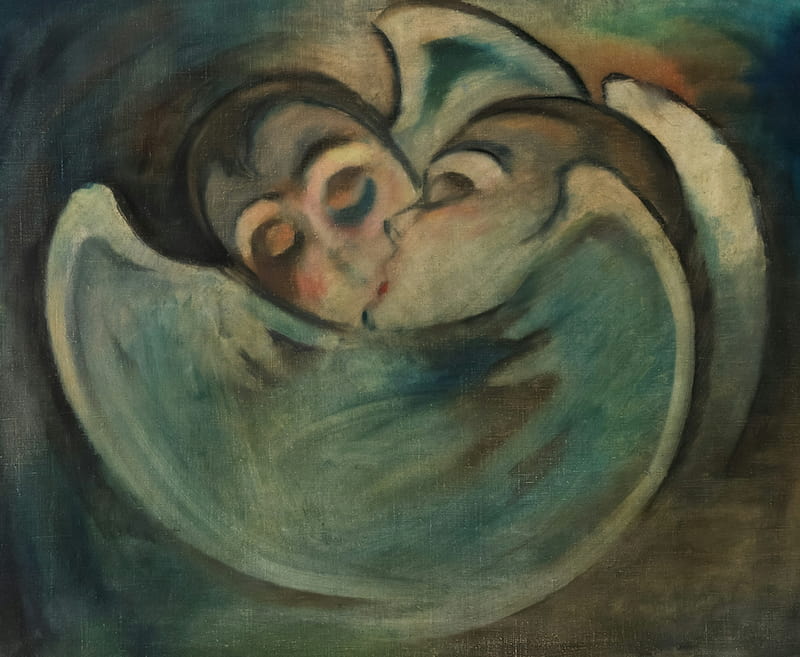
When love and idealism enter the picture, a lot of delusion can overtake us.
This is one of the reasons why I moved away from talking about “twin flames.” It became too burdened with false projections, trauma bonding, unhealthy codependency dynamics, and other new age nonsense.
For over 15 years, we've strived to make this website a haven of free, valuable information. Imagine a world where this knowledge wasn't readily available.
If this post sparked a meaningful insight or helped you in any way, please consider a donation as a heartfelt "thank you" for keeping this resource free.
Every contribution, big or small, allows us to keep giving back.
 Yes, I'd Like to Help
The way to recognize whether we have a true soul connection with another, versus mental fantasy or wishful projection, is by asking ourselves a few pointed questions:
- Do I depend on this person for my happiness?
- Do I think this person will “save me” from myself?
- Do I think this person “completes” me?
If you answered “yes” to any of these questions, I’d warily say “you need to work through your inner baggage before buying into any ‘one true’ story.”
I wrote about other misguided beliefs in my article on soulmate love myths. These false beliefs refer to soul mates but can also be applied to most soul connections.
Conclusion: Soul Connection as a Path of Return to the Self

When all is said and done, all forms of soul connections have one overarching purpose:
To awaken our hearts to love and call us back home to ourselves.
In the words of Gary Zukav in The Seat of the Soul,
“Spiritual partners recognise the existence of the soul, and consciously seek to further its evolution.”
All soul connections, whether platonic or romantic, are spiritual in nature. They are mirrors that reflect our own darkness, light, weaknesses, and hidden strengths.
Ultimately, the deepest soul connection, the one you will carry with you until the end of your life, is with your own soul. This is why Soul recovery is the true goal of all soulful connections: they remind you of the home within yourself. They remind you that the Beloved is inside your own heart.
In the words of Sufi mystic Rumi,
“Lovers don’t finally meet somewhere. They’re in each other all along.”
Tell me, what types of soul connections have you met in this lifetime? What have they taught you about yourself? I’d love to hear in the comments.



If you need more help, we offer 2 powerful ways to guide you on your inner journey:
1. The Soul Work Compass Course: Break free from feeling lost and disconnected. The Soul Work Compass is a practical 12-step course that transforms soul loss into soul clarity. Discover your core values, heal core wounds, and create a personalized compass to guide every decision you make.
2. The Inner Work Journal Bundle: Heal at the root. This Inner Work Journal Bundle guides you through self-love, inner child healing, and shadow integration with 150+ prompts and activities. You get editable digital files to use on any device or print unlimited times. Not for lukewarm seekers, these journals are for those ready to transform.
I thought my husband was my soul mate until he changed into someone I didn’t recognize after his accident. He is now gone and I’m searching to find my spiritual soul.
fantastic article, I feel I have a spiritual partner, she is someone I’ve loved most of my life. I don’t DEPEND on her, but she allows me to grow and reflect on who and what I am. She is strong and resilient. I’m a solitary type, I recognized so much in the words of this newsletter. Thank you
I’m so glad you have a balanced and healthy relationship, Russell. Thank you for sharing this 🌙
I lost my soulmate on March 8th. He was the flipside of my coin. I had known him all my life, so it’s been weird without him. I’m making it through, though.
I’m sorry for your loss, Angela. That sounds incredibly difficult, but I’m glad to hear that you’re making it through, though. May your heart find the healing it needs 💜
Interesting and comforting read.
I knew as soon as I saw he subject of your email “Why some people feel like ‘home’ ” that this was something for me… A connection I have, that could be a love connection and in some ways is, has this ‘home’ feeling for me. I’ve felt it so many times… when we talk, when we laugh and tease, when we hug those hugs when we melt into each other and stay close for many heartbeats, and when we are silent. He’s triggered wounds for me and helped me grow spiritual and in life choices. We even have telepathic ‘moments’, but we don’t talk about those when we meet. He’s more practical and down to earth, and I know he really likes me in a romantic way.
I’m drowning in different descriptions of twin flames, karmic, false twins, soul mates… I just know he’s my person and home, even though he’s scared and doesn’t want a relationship…
Regardless of what labels we choose (they are to satisfy the mind after all), it sounds like you have a truly special connection, Anna. Beautiful 💜
Wonderful article! I liked how you coined the term “soul friends”. They do exist. I have one soul friend from my adolescent days whom I can confine on. She is my foil . She’s bubbly and eccentric while I’m reserved and moody.
Also, I agree on your view on ‘twin flames’. It has become negative term.
Glad you like the “soul friends” term, Ella. It’s wonderful you have one yourself. And yes, the twin flames term has become quite shady in recent times.