
This article is part of the Meditation hub, a single thread within the broader practice of inner work.
Read more from this hub →
Meditation can feel dry and boring, or it can be a joyful and fascinating experience. It all depends on what technique and frame of mind you use.
As the foundation of so many spiritual and healing paths, there is so much that has been taught, shared, and written about meditation that it can get a little overwhelming.
So where do you start? What meditation techniques suit you best? We’ll find that out in this guide.

Soul Work Compass Course:
Drifting through life without direction is exhausting. If you feel paralyzed by confusion or self-doubt, this course is your map out of the fog. We guide you safely through your inner darkness to uncover your true needs, values, beliefs, wounds, and sacred gift. Turn your confusion into crystal-clear direction and find your True North today.
Before we get to that, I want you to reclaim this path as your own. It’s common to hear self-help gurus, spiritual teachers, and even therapists prescribe meditation as a “non-negotiable” part of inner work, healing, and spiritual transformation.
But what I’ve learned after many years on this path is that you’ve got to claim meditation as your own authentic path – not as something you “should” do, but as something that gives you access to your own Soul’s wisdom and truth.
In his book The Joy of True Meditation, poet and teacher Jeff Foster puts this in a beautiful and powerful way, writing,
“Let us journey together now, back into the richness of ordinary life … leaving behind all ideas of how we ‘should’ be, letting go of other people’s guidebooks and self-help books and holy books, incinerating our second-hand, inherited maps of reality, and lovingly illuminating our own first-hand, real-time, authentic experience in the fire of present awareness. This is true meditation, the kind of meditation that can save your life: Pure fascination with this moment, exactly as it is.”
I love that definition of meditation: pure fascination with this moment, just as it is. Because when you pay attention, there is always something going on in your body, your mind, or your surroundings. This is where the magic of life can be felt. The meditation techniques in this article that I’m going to share can help you access that present-moment joy.
Table of contents
Two Approaches to Meditation
To reclaim meditation as your own authentic practice, it’s helpful to get a big picture perspective. This will help you know which meditation technique is right for you.
In their book Meditation: An In-Depth Guide, mind-body therapists and meditation teachers Ian Gawler and Paul Bedson describe two main approaches to meditation:
- The ‘no technique’ open awareness method
- The technique approach (aka, a path or practice with a clearly defined method)
The ‘no technique’ approach is a bit of a paradox. On the one hand, it’s a simple method: you don’t need to ‘do’ anything, just sit there in open presence. However, it’s also the most difficult, as most of us have chaotic minds that look like the inside of a nightmarish circus.
Want to get LonerWolf at the top of your Google search results?
The second ‘technique’ approach to meditation is more beginner-friendly. But with that said, it can also become a little overwhelming, especially with so many meditation techniques out there. That’s where this guide comes into the picture!
Some people like to set up a meditation altar to help them stay committed to this practice. So if that calls to you, by all means do it. But if not, it’s not essential.
3 Styles of Meditation

One conscious breath in and out is a meditation.
– Eckhart Tolle
Within the meditation technique approach, there are three styles that meditation teachers Gawler and Bedson define as:
i) Attention meditation – this involves paying attention to something like our breath, a sound, etc., and is generally called mindfulness meditation
ii) Intention meditation – this involves meditating to gain a certain outcome, such as relaxing, opening the heart, connecting with your inner child, etc., and is often done through visualization, prayer, or chanting methods
iii) Inquiry meditation – this is an investigative meditation technique that involves asking deep questions such as “Who am I?” and listening for an answer.
I’ll share a mix of meditation styles below so you can get more familiar with them.
What Meditation is Not
I’ve spent months, even years, stuck meditating in a way that feels frustrating, confusing, and pointless. Because I’m as stubborn as a donkey, I’ve persisted with many of these techniques, only to (thankfully) realize that I was totally misguided. Better late than never, right? ;)
Here are some things to keep in mind when starting or switching your meditation practice:
- Meditation isn’t about grasping for or repressing certain experiences.
Chasing the bliss and spiritual high of peace and tranquility is a big reason why most people meditate. And sure, meditation can give you that. But that’s not the point of it. The point is to help you be fully present with whatever is happening in your experience, without identification or attachment.
Would you like to save this?
Your information will never be shared.
Meditation also isn’t about trying to suppress uncomfortable emotions like anger or sadness, as tempting as that may be. (This is a form of spiritual bypassing, by the way.)
In the words of Tibetan Buddhist nun Pema Chödrön in her book When Things Fall Apart,
“…right from the beginning it’s helpful to always remind yourself that meditation is about opening and relaxing with whatever arises, without picking and choosing. It’s definitely not meant to repress anything, and it’s not intended to encourage grasping, either.”
2. Meditation isn’t about judging your experience.
It’s tempting to judge what comes up within the circus of your mind while you meditate. Intrusive thoughts like, “Oh man, I’m having another thought about work,” “Why can’t I just be zen and stop having a million thoughts!!!” and “What kind of weird thought was that???” arise all the time. This type of internal conflict is common.
But in his famous book Wherever You Go There You Are, professor and meditation teacher Jon Kabat-Zinn writes,
“Meditation means cultivating a non-judging attitude toward what comes up in the mind, come what may. Without it, you are not practicing meditation. Wherever you go there you are.
The point isn’t to judge yourself or try to be perfect. It’s simply being present and practicing awareness – even to be aware of your lack of awareness!
Spiritual Awakening & Meditation (Plus a Warning)

When you contemplate the nature of Self, you are meditating. That is why meditation is the highest state. It is the return to the root of your being, the simple awareness of being aware. Once you become conscious of the consciousness itself, you attain a totally different state. You are now aware of who you are. You have become an awakened being. It’s really just the most natural thing in the world.
– Michael A. Singer
Meditation is a powerful way of deepening your inner work practice and spiritual awakening journey. It can help you to experience more calmness, openness, love, and freedom.
But at the same time, I must give a word of warning:
Be very gentle with yourself as you explore the world of meditation. Practice self-love and self-care by tuning into what works for you and what doesn’t.
In some extreme cases, certain meditation techniques can trigger a spiritual emergency where the ego (or self-identity) becomes totally destabilized. In particular, I’m referring to certain self-inquiry, kriya, and kundalini meditation techniques.
For over 14 years, we've poured our hearts into creating free content on this website. Unlike many platforms, we believe this guidance should be accessible to everyone. If this post empowered you in any way, please consider making a donation to keep us going. Any amount (one-time or ongoing) makes a huge difference.
 $3
$3So go slowly in your exploration. Speaking from experience, I know how debilitating meditation can be when not approached with a sense of gentleness.
For instance, I once went so deep into meditation that a traumatized and scary part of my psyche was beckoned from “the deep.” I had to seek out a professional’s opinion to know how to handle this unexpected side effect from meditation.
Remember to listen to and respect your mental, emotional, and physical well-being.
12 Illuminating Meditation Techniques & Paths

Prayer is when you talk to God; meditation is when you listen to God.
– D. Robinson
The world of meditation techniques can be a little overwhelming – let’s be frank here!
Meridians, mantras, mudras, breathwork techniques, lectio divina … it can all get a little too much.
So to help you navigate the labyrinth of information, I’ve summarized eleven top meditation paths and practices below.
Take these bite-sized summaries slowly. Also know that they are (obviously) not comprehensive, but are instead meant to be nuggets of information that can help you make a decision about what may best suit you.
I have not included Transcendental Meditation® here as this technique is not taught freely. You must pay to receive direct guidance and ongoing support. If that sounds like it resonates with you, check out their website.
Here are twelve simplified meditation techniques and paths:
1. Vipassana meditation
Vipassana means ‘insight.’ It’s one of the oldest spiritual meditation practices, being taught in India over 2,500 years ago. The purpose of it is to have a crystal clear awareness of what is happening within you, at the exact moment it happens. The goal is to help you find freedom from negative thoughts and rumination, and experience more clarity and Spiritual Liberation. Focusing on one’s breath, mental noting, body scanning, and contemplating the nature of impermanence are practices often used during Vipassana.



2. Mindfulness meditation
Mindfulness meditation is similar to Vipassana, but it’s more focused on observing your thoughts, feelings, and sensations without judgment, as opposed to gaining deeper ‘insight’ into the impermanence of passing phenomena (as in Vipassana). As one of the most popular presence-focused practices out there, the beauty of mindfulness meditation is that it can be incorporated into daily life more easily than other meditation techniques. This makes mindfulness not just a practice that begins and ends on the meditation cushion, but one that can be brought into everyday instances like washing the dishes, commuting to work, and interacting with people. I’ve written more about some mindfulness exercises for anxious and depressed minds if you want to go deeper.
3. Metta meditation
Metta means ‘loving-kindness’ and is a more heart-centered form of healing meditation. It derives from Buddhist philosophy and involves cultivating compassion toward oneself and others. You begin by wishing yourself well and saying “May I be happy, may I be well” (or similar). You then think of a loved one and mentally wish them the same: “May you be happy, may you be well.” Finally, you think of someone you feel neutral toward, perhaps a co-worker. Wish them happiness. Finally, bring to mind an enemy or someone you struggle with and wish them happiness.
4. Mantra meditation
Mantra meditations can be found in a range of different religions – from Christianity and Islam to Hinduism and Jainism. Essentially, mantra meditation involves choosing one powerful word, phrase, or sentence and repeating it continuously. Common mantras include: “Om,” “Om Namah Shivaya,” “I am,” “Om Mani Padme Hum,” “So Ham,” “Elohim,” “Hare Krishna,” “Gate gate paragate parasamgate bodhi svaha.” The goal of mantra meditation is enlightened consciousness.
5. Zazen meditation
Zazen, or Zen meditation, derives from Zen Buddhism. The goal is to free the mind, find inner peace, and perceive the nature of existence. Zazen practitioners generally focus on cultivating open awareness (simply letting things come and go in your mind) and focusing on the breath. Correct posture is also emphasized by Zazen as the body and mind are seen as one. Interestingly, researchers have found a correlation between practicing Zazen and greater access to the unconscious mind.
6. Daoist meditation
Daoist, or Taoist meditation, stems from the Chinese religion and philosophy of Taoism. There are a number of techniques that involve contemplation, visualization, and mindful awareness. The emphasis of Daoist meditation is to create mind-body harmony by balancing the life force energy and entering the Tao (Spirit).
7. Gazing meditation
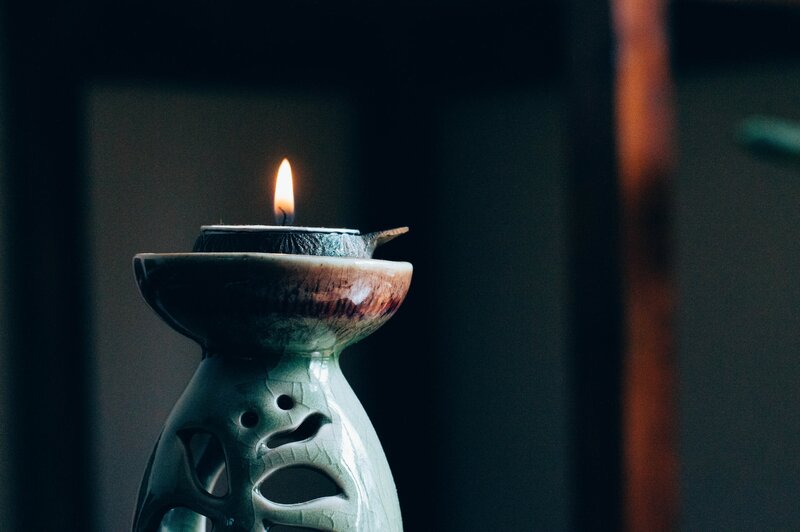
Gazing meditation, also called Trataka (Sanskrit for ‘to gaze’), is a way of sharpening our inner focus by focusing on something outside of ourselves. Usually, gazing meditation involves meditating on a flame, as fire is said to cleanse the third eye chakra. However, there are other forms of gazing meditation, such as meditating on a sacred symbol (such as a yantra) or object in our surroundings. The goal is to help you eventually shift to internal seeing or self-realization.
8. Self-inquiry meditation
This form of spiritual meditation was developed by the Indian Hindu sage, Ramana Maharshi. The technique essentially involves repeatedly asking the question, “Who am I?” With time, the stories and blockages of the mind dissolve. The goal is to recognize our True Nature as Pure Awareness.
9. Visualization meditation
As an umbrella term, visualization meditation encompasses many different practices and techniques. Just like the name suggests, visualization meditation involves visualizing or imagining some kind of healing image. Common forms involve visualizing the chakras, a healing light, a peaceful place, colors, a guru/deity, or a sacred symbol. The goal is more of a holistic sense of healing, well-being, and happiness.
10. Kriya yoga
While kriya yoga is a yogic technique, it’s also a meditative practice. In fact, this form of spiritual meditation is a complete spiritual path in and of itself. Indian guru Paramhansa Yogananda is credited with popularising this practice. Kriya, a Sanskrit word that means action, points to the goal of this avenue of spiritual evolution, which is to actively use the breath to move energy up and down the spine. The result, according to practitioners, is accelerated spiritual transformation.
11. Sound meditation
Sound meditation is another ancient practice of spiritual meditation. From the ancient Australian Aboriginal use of the didgeridoo to Tibetan Singing Bowls and the pipe organs in European Cathedrals, sound meditation offers tremendous variety. The entire practice is usually very simple: close your eyes and bring your attention to a certain sound. Modern forms of sound healing often incorporate crystal singing bowls, tuning forks, pan drums, windchimes, and even binaural beats. You can choose to play these instruments or simply listen to them on your phone.

12. Kundalini meditation
Kundalini meditation is one of the more complex – and dangerous – forms of spiritual meditation out there. These two facts alone are enough to make most people’s ears prick up and fuel the desire to excitedly jump headfirst into this practice. But be gentle. Seek out a trained (and competent) practitioner. This practice can have serious side effects if not approached wisely. In a nutshell, kundalini meditation involves awakening the kundalini – or spiritual – energy at the base of the spine. It involves focusing on the chakras, the repetition of a mantra, mudras (yogic hand gestures), and breathing techniques. (Read more about kundalini awakening.)
How Do I Choose the Right Form of Meditation For Me?
With so many illuminating paths out there, which one do you commit to?
My answer is to pay attention to which one ‘calls’ to you. In other words, which one generates a sensation of intrigue, excitement, or awe?
If none call to you, reflect on what you would like to ‘get out of’ these meditation techniques and paths. For instance, perhaps you want to experience more inner peace, balance your energy, cultivate compassion, improve your health, or deepen your spiritual awakening.
Once you have decided, commit to the practice. (After all, how else will you discover the benefits or learn whether that practice is right for you or not?)
If you can, set aside a minimum of three months to one meditation practice.
Of course, if you’re experiencing negative side effects, stop it immediately.
But otherwise, get into the habit of practicing that meditation technique each day for at least 10 minutes.
Reading books, watching videos, and attending classes can also help deepen your understanding of your chosen meditation technique.
***

Meditation will not carry you to another world, but it will reveal the most profound and awesome dimensions of the world in which you already live.
– Zen Master Hsing Yun
Finally, remember that the goal of meditation isn’t to escape this reality. The goal is to help you awaken you to it, within it.
Meditation is a path of embracing both your humanity and divinity as the divine paradox that you are.
So tell me, what meditation path or technique calls to you? Do you have any meditation advice that you’d like to share to inspire and support others here? If so, comment below. You never know who you may help by doing so.
Whenever you feel the call, there are 2 ways I can help you:
1. The Soul Work Compass Course: Ready for deep transformation without the fluff? The Soul Work Compass provides a step-by-step path to finding your inner truth and life direction. Heal core wounds, clarify your values, and walk away with a concrete guide for living. Get started now!
2. The Inner Work Journal Bundle: Stop surface-level healing. Dive into the depths with 150+ journaling prompts designed to help you face your demons, heal childhood wounds, and embrace your shadow. Three sacred journals, lifetime access, print as many times as you need. Real transformation starts here.
I am intrigued by the Vipassana, trataka, and Kundalini meditation styles. However, I have the most meditation experience with mindfulness, creative visualization/guided imagery, and sound healing.
Thanks for sharing, Katie. :) Trataka is one of my favorites!