

“Your task is not to seek for love, but merely to seek and find all the barriers within yourself that you have built against it.” – Rumi
In the 15+ years of actively healing myself, writing multiple journals and books, and running this website full-time to support millions of seekers, I’ve discovered one ancient and timeless truth:
Within the heart of all loneliness, emptiness, meaninglessness, and disconnection is a longing to come home to ourselves. To heal. To feel whole. To be fulfilled. To find peace.
We long for the warmth of love.
We crave a felt sense of belonging and wholeness.
Inner work is the path that can help us with that.
As a sacred journey to the center of ourselves, inner work can help us heal our wounds, befriend our demons, find our gifts, live our purpose, and recover our Souls so that we can shine our light into this world.
There is no path more meaningful, more empowering, or more transformative than inner work.
Without this path, I wouldn’t have healed from years of childhood abuse, developed true self-compassion, found and built a beautiful life with my soulmate, and actualized a body of work that fulfills me each and every day.
Inner work creates profound, bone-deep change not just in ourselves, but it ripples into the world around us, leaving a legacy of inter-generational healing and shining a light in the darkness.
This is a truth that I’m not only willing to base my entire extensive body of work on, but it’s a reality that has been echoed by thousands of philosophers, mystics, sages, thinkers, psychologists, and healers for centuries.
If you’re feeling lost in life, stuck, purposeless, or you keep repeating the same toxic patterns, and you feel called to the inner world, this is your official invitation to begin this path, right here, right now. I’ll show you how to get started. Let this guide, and this whole website, be your lantern in the dark.
Free Inner Work Journal Prompts!
Want to get started on your inner work journey? These free journal prompts can help you focus and dive deep.
Table of contents
- What is Inner Work?
- 25 Signs You Need to Practice Inner Work
- What Does it Mean to “Practice Inner Work”?
- Inner Work and Soul Recovery – Our Approach
- The Four Pillars of Inner Work
- Where to Start? (Inner Work Test)
- The Soul’s Journey of Inner Work
- Conclusion: Inner Work is a Journey of Coming Home to Yourself
What is Inner Work?

Inner work is the psychological and spiritual practice of illuminating, befriending, and dissolving the wounds, patterns, and blockages that obscure your soul’s inner light. Its ultimate goal is to help you heal, awaken, transform, and come home to yourself on the deepest level.
In the words of Jungian analyst and author Robert A. Johnson in his book Inner Work,
“Inner work is the effort by which we gain awareness of the deeper layers of consciousness within us and move toward integration of the total self.”
When we do inner work, we shine the light of awareness onto our inner landscape, which contains the various layers of our psyche: the conscious, subconscious, and unconscious realms.
Your inner world contains all your hidden feelings, memories, thoughts, beliefs, prejudices, wounds, shadows, and other mental and emotional conditions that influence your ability to feel Whole and at peace at a core level.
By doing inner work, little by little, you’ll be able to move past fears, limitations, addictions, depressions, and the feelings of unwholeness that tend to plague us humans, so you can find more power, purpose, and peace within.
25 Signs You Need to Practice Inner Work

So, do you need inner work?
I’ve got to be frank here: that was a rhetorical question!
If you’re a human being at any place in life’s journey, you’ll certainly need some degree of inner work.
Nevertheless, here are some clear signs that you need to practice inner work:
- You feel lost in life
- You don’t know who you are anymore
- You feel lonely and like an outsider looking in on the world
- You frequently get into fights with others
- You’re always people-pleasing
- You’re not confident being yourself
- You have low self-esteem
- Your thoughts are almost constantly negative and self-critical
- You feel constantly unmotivated and “flat”
- You’re going through a Dark Night of the Soul (or spiritual crisis)
- You suffer from chronic health issues
- You can’t sleep properly
- Life doesn’t feel real
- You feel a sense of hopelessness
- You feel a sense of emptiness
- You have fits of intense anger or sadness
- You believe that the world is against you
- You struggle to trust others (or yourself)
- You keep repeating the same mistakes
- You keep attracting the wrong people into your life
- You’re self-destructive and self-sabotaging
- You have a strong drive toward addiction
- You have many strong emotional triggers
- You struggle with high levels of anxiety or panic
- You want to be alone all the time or around others all the time (to escape yourself)
The more signs you can relate to, the higher the degree of inner work you need to consider doing. We’ll explore the four “core” inner work paths below.
Note: many of the symptoms above point to certain types of mental illness. While inner work is not a replacement for professional help, such as from a trained psychologist (who we can think of as a medically trained inner worker), it complements, empowers, and enriches all forms of therapy. Personally, I see it as a vital practice that is just as essential as sleeping, exercising, or doing anything that genuinely helps you at a core level.
What Does it Mean to “Practice Inner Work”?

True inner work isn’t Instagram-worthy or something you can wear as an egotistical badge of superiority.
Authentic inner work, in its very essence, is about placing healing, love, truth, and freedom above all else.
It’s about looking into the eyes of your most wounded, destructive, and traumatized parts with unconditional love. It’s the messy and sometimes boring process of committing to daily self-inquiry and self-reflection. It’s about allowing yourself to be called out, torn down, burned, and built back up a thousand times over from a place of radical self-responsibility.
Inner work is a process of eternal death and rebirth. It is a lifelong journey– even after having attained a higher level of consciousness – for when you believe you have “arrived” at some untouchable healed or peaceful state, that is when stagnation occurs. That is when psychological and spiritual narcissism thrives, and the shadow self rears its ugly face.
At all levels, stages, and phases of life, we need inner work. So let’s begin with the basics!
Inner Work and Soul Recovery – Our Approach

“The great malady of the twentieth century, implicated in all our troubles and affecting us individually and socially, is ‘loss of soul.’ When the soul is neglected, it doesn’t just go away; it appears symptomatically in obsessions, addictions, violence, and loss of meaning.” – Thomas Moore, Care of the Soul
As we become more conscious as a species, people are starting to talk and write about inner work more. This is a blessing. We desperately need to explore and heal our inner worlds.
But one essential element of inner work I see missing in most people’s exploration of this path is the soul.
We are suffering from an epidemic of soul loss as a species. In his visionary work The Red Book, psychiatrist and mystic Carl Jung writes of this experience powerfully,
“My soul, where are you? Do you hear me? I speak, I call you – are you there? I have returned, I am here again. I have shaken the dust of all the lands from my feet, and I have come to you, I am with you. After long years of long wandering, I have come to you again. … Give me your hand, my almost forgotten soul. How warm the joy at seeing you again, you long disavowed soul.”
Why Reclaiming the Soul is Essential to Inner Work

Without recovering access to our souls, inner work becomes purely a psychological activity.
When inner work is purely mental, it misses the depth of our being. When inner work is purely mental and spiritual (as in, trying to reach a “higher level of consciousness”), it ignores the unique essence of our innermost selves.
The soul is our bridge between ego and Spirit. Without recovering a connection to our souls, we either get stuck in the ego and the merry-go-round nature of the mind, or we get stuck in a dissociated spiritual-bypassy “not-quite-in-this-world” state of Spirit.
We need the ego to keep us alive, and Spirit to connect us with all of life, but we need the Soul to connect with the wisdom of our heart, our unique calling in life, and a felt sense of wholeness.
How Soul Recovery Appears Internally: The 5 W’s of the Soul
“The soul is individualised spirit.” – Paramahansa Yogananda
If Spirit is the oceanic consciousness that we connect to in deep states of meditation, Soul is like a wave within that ocean. Soul is our unique essence, our innermost heart, our Deeper Self.
You can tell that you have recovered access to your soul inwardly when you experience any number of what I call the 5 W’s. These define the Soul as:
- Wise (aware, knowing, discerning)
- Wild (free, organic, creative)
- Warm (compassionate, kind, heartful)
- Welcoming (open, non-judgmental, curious)
- Whole (centered, grounded, complete)
How Soul Recovery Appears Externally: PEACE
“Only by listening to the voice of the soul — a voice by definition nonconformist, rising above the din of convention and expectation and should — do we become fully and happily ourselves. To be aware of ourselves is to hear that voice. To be content in ourselves is to listen to it.” – Maria Popova
When we experience Soul Recovery through inner work, we experience more PEACE in life. This is an acronym I’ve created to help you know what recovering the Soul looks and feels like externally (and also internally) based on years of lived experience and research. You’ll experience:
- Playfulness – there will be more joy in your life as a whole, more openness to the magic, mystery, and wonder of existence
- Energy – you’ll have access to more vitality, spirit, life-force, or “chi”
- Authenticity – you’ll live, act, and make decisions from an authentic place of inner power
- Centeredness – you’ll be more grounded and anchored in your inner truth
- Empowerment – you’ll feel more connected to your power, purpose, and potential
So how do we recover our Souls? How do we experience the 5 W’s and find more PEACE in life? We do that through the four pillars of inner work:
The Four Pillars of Inner Work

Inner work has helped me to find more inner peace, wholeness, self-sovereignty, and meaning in life than I ever could have imagined would be possible.
Because of this process, I feel a sense of contentment in life, one that I never could have felt without doing this work. And the best thing is that the deeper I go, the harder it can get, yes, but the more joy and wholeness I feel.
My life wouldn’t be the same without inner work and Soul recovery, and I want the same for you too.
Having spent years studying, sharing, and practicing this path from thousands of scattered sources, here are what I define as the “four pillars of inner work”:
1. Embodiment

“Real learning can occur only in dialogue with one’s body.” – Eugene Gendlin
Also known as body work, embodiment is the first foundational step in the inner work process. It is the foundation and something to always begin with and infuse into your practice every step of the way.
Without getting grounded in your body, it’s extremely difficult to make any lasting progress in the other three paths because you remain in a state of dissociation.
Embodiment means getting back in touch with your body from the inside out, learning the wisdom it carries, and bringing it into a state of balance and groundedness.
This isn’t about being perfectly healthy or toned master yogi. Instead, it’s about drawing empowering boundaries (internally and externally) and learning to regulate your nervous system.
Practicing embodiment helps you to ensoul your inner work practice by bringing the soul back into the body and your daily felt experience.
Recommended places to start:
- Learning how to regulate the nervous system (guide)
2. Self-Love
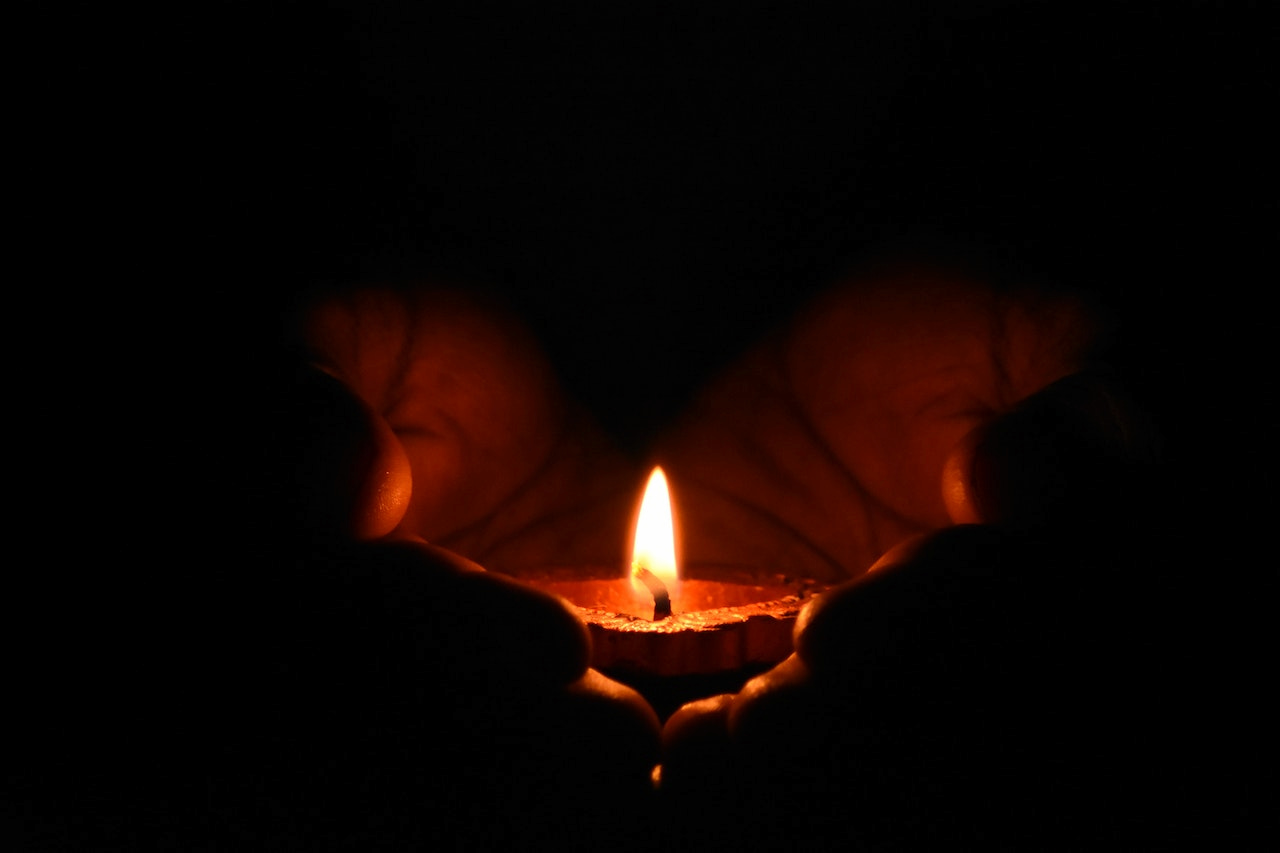
“The road to your soul is through your heart.” – Gary Zukav
After Embodiment work comes Self-love, or what is also known as self-compassion.
Without building a good relationship with yourself, the next two pillars of inner work listed become too intimidating, too difficult, or just plain detrimental to your well-being. After all, if you don’t have a caring relationship with yourself, your wounded inner parts won’t feel safe enough coming out of the darkness to be seen by you.
Learning to show kindness and compassion towards yourself is essential to avoid re-traumatizing yourself with negative self-judgment. It’s a way of moving out of the inner Critic’s self-hating mental dialogue and into a space of warmth and friendliness towards yourself.
One of my favorite forms of self-love is mirror work. Mirror work quite simply involves using a mirror to clearly see your insecurities and fears. It also connects you with the deeper essence of yourself that is full of unconditional compassion, forgiveness, and acceptance (your soul).
Recommended resources to start this path:
- Self-Love Journal (guided journal)
- How to Love Yourself (Ultimate Beginner’s Guide) (article)
3. Inner Child Work

“The day the child realizes that all adults are imperfect, he becomes an adolescent; the day he forgives them, he becomes an adult; the day he forgives himself, he becomes wise.” – Alden Nowlan
Once you have established a basis of self-love within you, it is then possible to do inner child work. This is a form of inner work that involves examining your childhood wounds, fears, and beliefs. This path often involves a deep level of grief work.
To differing degrees, we all carry a wounded inner child. Our job as adults is to reconnect with this childlike part of ourselves, excavate our old toxic childhood beliefs, reparent ourselves, and welcome this lost or buried part of ourselves home to love.
Your inner child is a source of tremendous creativity, joy, spontaneity, and wisdom.
However, at the same time, your inner child can be a source of obsessions, fears, neurosis, self-sabotaging behaviors, and limiting self-beliefs.
Inner child work can rile up a lot of unfinished business, so do this work slowly and carefully.
However, as one who had a traumatizing childhood and who has done a lot of inner child work, I can tell you it’s absolutely worth all of the pain, tears, and anger. You need to purge that pain to find freedom!
(Please note that, for some, professional 1:1 guidance is needed when doing inner child work, especially when dealing with severe trauma.)
Recommended resources to start this path:
- Inner Child Work Journal (guided journal)
- 25 Signs You Have a Wounded Inner Child (article)
- Inner Child Work: 5 Healing Techniques (article)
4. Shadow Work

“If you do not bring forth what is within you, what you do not bring forth will destroy you.” — Gospel of Thomas
At the deepest level of the inner work process of soul recovery is shadow work, a form of inner work that is the most complex, elusive, and advanced of all.
With shadow work, we are literally exploring the darkest places of our psyches that we deliberately suppress, deny, and disown each and every day.
We all know what lurks in the shadows. (Yes, the stuff of nightmares, and also the heartbreaking stuff of tragedies and deep wounding.)
Shadow work is the practice of exploring these inner demons. Within your shadow lurks everything that has been outlawed, deemed ‘taboo,’ ‘bad,’ ugly, and unacceptable by your parents and society. Your shadow self contains all that you are secretly ashamed of, reject outright, or have disowned within yourself.
Before attempting shadow work, it is absolutely imperative that you practice self-love.
You MUST have stable and healthy self-esteem before doing shadow work. Why? Shadow work can easily make you feel a thousand times worse about yourself if you already have poor self-worth. For this reason, shadow work is an advanced form of inner work that is not for beginners.
(I also recommend doing shadow work with a mental health professional if you carry severe inner trauma, as it can potentially be re-traumatizing if you don’t approach it gently.)
However, if you’ve had experience doing inner work for a while, I recommend beginning shadow work in a slow and gradual way. Don’t overwhelm yourself, and keep your explorations simple, focused, and short. Our Shadow Work Journal can help you begin (see below).
Recommended resources to get started:
- Shadow Work Journal (guided journal for beginners-advanced)
- Shadow Work: The Ultimate Guide (article)
- Mindful Shadow Work Exercises (book for beginners)
Where to Start? (Inner Work Test)

If you’re wondering where to start your inner work and soul recovery journey, take our Inner Work Test. Within 3-5 minutes, you’ll have your answer.
In summary:
- If you’re often dissociated from your body and have a dysregulated nervous system, start with embodiment work.
- If you’re fairly well grounded and connected with your body, start self-love.
- If you have a caring connection with yourself, move on to inner child work.
- If you’ve done a lot of inner child healing, move on to shadow work.
Ultimately, all four forms of inner work melt and morph naturally into each other.
It’s also common for us to go forward and backward on this journey. For example, you might start with self-love work, but then realize you are still stuck in a state of fight-or-flight in daily life (so embodiment work is needed). You might unknowingly begin with shadow work only to realize that you haven’t made your inner child feel safe enough yet.
Inner work isn’t linear. It’s cyclical. So be prepared to revisit familiar territory when it comes up naturally in daily life. The key is always returning to a space of SOUL: sensing, observing, understanding, and loving.
You also don’t need to “perfectly” do each stage. The goal is “good enough.” I recommend a minimum of six months per phase, but often they can take longer (and often do), especially if you suffer from complex or deeply ingrained traumas.
The Soul’s Journey of Inner Work

“The alchemical idea of transmuting base metals into gold is an excellent metaphor for the inner work. We must ‘break down’ aspects of our character that are in the way of the realization of our deeper, higher nature. This deeper, higher nature is the Philosopher’s Stone, along with our ‘higher calling’ in life.” — P. T. Mistlberger, The Inner Light
On a physical, mental, emotional, and spiritual level, inner work is a hero’s journey. It is an archetypal and alchemical process of growth, healing, and transformation.
Alchemically speaking, inner work is about transmuting the darkness within our nature, and finding the gold of our innermost Selves.
Inner work is a journey that is broken down into the following categories. Note that the four pillars of inner work (embodiment, self-love, inner child work, and shadow work) can be practiced within all of these phases on the path:
Phase 1: Know Yourself
Inner work often starts with the feeling of being lost and not knowing who you are. You may experience a crisis in life that awakens you to the fact that you don’t truly know yourself mentally, emotionally, or spiritually.
You may sense that you’ve been living on “autopilot” for most of your life or that you’re stuck in a false matrix of others’ projected desires, beliefs, and expectations.
You want to break free, discard these inherited scripts, and live a life that feels authentic to you.
To know yourself, you’ll find that you’re drawn to rebelling against the old, being a lone wolf, and walking your own path.
As you start to get a more authentic sense of yourself, you might come across any of the following topics (which you can read about more by clicking on them):
- Walking the path of individuation and becoming a more self-actualized version of yourself.
- Learning how to be your authentic self more fully.
- Exploring how to find yourself in a loud and fast-paced world.
- Discovering that you might be an introvert, empath, or even an old soul.
- Embracing the empowering path of the autodidact (or self-taught learner).
- Examining the many different archetypes within your psyche.
Phase 2: Find Your Path
After discovering the basics of your inner identity and reclaiming a more authentic sense of self, you may start wondering about your place in the grand scheme of things.
It’s at this point that you might ask yourself questions like“What is my higher purpose?” “Is there a realm beyond this one?” “How do I find my higher or deeper self?”
As you start to dive deeper into the nature of yourself and existence, you might come across any of the following experiences and topics (which you can read about more by clicking on them):
- Experiencing a spiritual awakening that opens your eyes to the deeper nature of reality.
- Beginning your spiritual journey.
- Starting your soul searching path.
- Going through an existential crisis where you feel lost and temporarily lose your path and soul connection.
- Practicing meditation techniques to help you regain a sense of peace and wholeness.
- Starting a journaling practice to integrate your inner work.
- Exploring your subconscious mind and the ways in which it can help and hinder you.
- Connecting with your spirit animal as a spiritual teacher and guide.
- Having moments of synchronicity, which are like winks from the Universe, helping to guide you on your path.
Phase 3: Deep Connection
As you start finding your unique path of inner work, you may start to realize that a huge area of healing needs to occur within your relationship with others.
So many of our wounds (usually most of them) come from our parents, siblings, coworkers, romantic partners, and other people in our lives.
As you go deeper into your inner work, you might start exploring and working through the following topics (click on the relevant topic to you to learn more about it):
- Feeling alone in life and trying to find a sense of connectedness within (and without) again.
- Examining your relationship with a sense of belonging and what blocks this natural experience.
- Learning to work through the wounds present in your soul connections and seeing relationships as a mirror.
Phase 4: Heal Your Wounds
Once you’ve set the basic groundwork by building an understanding of your identity, authentic path, and relational wounding – or alongside this process – you’ll start the active process of exploring and healing your wounds.
This is a multi-faceted process, which is where the bulk of our inner work and soul recovery happens.
Here are the themes, practices, and issues that may arise for you to shine a light on (feel free to click on any relevant topic to you right now to learn more about it):
- Learning how to regulate your nervous system.
- Exploring your self-worth wounds.
- Practicing more self-love and compassion every day.
- Beginning your inner child work path.
- Actively working through ingrained childhood trauma.
- Illuminating your inner demons via shadow work.
- Loosening the bonds of your toxic relationships.
- Navigating the dark night of the soul.
- Practicing ongoing soul recovery.
You may also find yourself exploring paths and practices beyond inner work, like sound healing and other complementary modalities. These can support your main inner work practice beautifully (for example, every morning I do Reiki healing, which helps to clear and ground me).
Conclusion: Inner Work is a Journey of Coming Home to Yourself

At its core, inner work is about recovering your Soul, your authentic essence, your deepest Self.
It’s a journey of returning to love: for yourself, for others, and for life.
It is a path of unity and rediscovering your wholeness after the fragmentation of trauma.
It is a portal to finding more power, purpose, and potential.
Ultimately, inner work is about coming home to yourself.
It’s an echo of what mystics, sages, and philosophers through the ages have pointed to: everything you need is within you. The connection, belonging, and peace you yearn for are inside your very soul.
Tell me, what path of inner work and soul recovery calls to you right now? I’d love to hear below in the comments.
Need help? Our journals can help you get started:
(We plan to release an Embodiment journal soon.)
Mike, I’m sorry to hear about your heart condition, sometimes life gives you one of those rude awakenings to get us to pay attention. It’s great to see you’re focusing on self-care, healing and boundaries 👍
Society under a consumption model benefits and us uncentivized from unhealed wounds, poor health and unhappiness because we’re more likely to try to buy our problems away or at least distractions from them.
Part of this work is hopefully to bring about enough individual change that it ripples into the collective. I’m happy to have readers like you sharing this journey with us 😊, thank you.